Service Hotline:86-17346269651 /

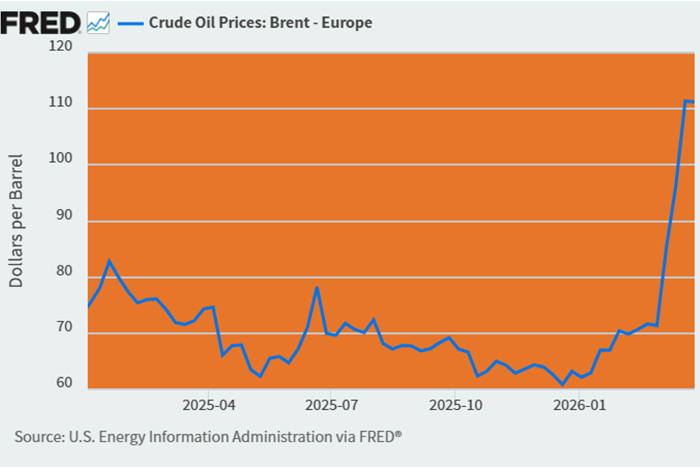
March 2026 — Global oil prices have surged sharply once again, driven by escalating geopolitical tensions. In several regions, fuel prices have risen by more than 40%, while crude oil in the Middle East briefly exceeded $150 per barrel—an all-time high and an increase of over 130% compared to pre-conflict levels. This volatility is now rapidly transmitting through the real economy via energy, raw materials and logistics networks.
In the industrial vehicle sector, the impact is particularly pronounced. On one hand, rising crude prices are directly increasing the operating costs of diesel-powered forklifts. On the other, upstream costs for steel, rubber and chemical materials are also climbing, pushing up manufacturing costs. At the same time, higher transportation expenses are compounding pressures on equipment distribution and end-user pricing. The cumulative effect across the supply chain is intensifying cost pressures throughout the material handling industry.
Oil price volatility is not a short-term phenomenon. Over the past two decades, global crude prices have fluctuated repeatedly due to financial crises, geopolitical developments and major global events. Against this backdrop, both industry operators and end users are facing a growing reality: costs are becoming increasingly uncontrollable. For equipment reliant on fossil fuels, cost control remains largely dictated by external markets. When oil prices rise, businesses have little choice but to absorb the impact.
As a result, a broader industry consensus is emerging: oil price uncertainty should not merely be endured, but rather transformed into a catalyst for technological upgrading and energy transition.
In this context, the electric forklift is gaining traction as a viable alternative, offering greater cost stability and operational predictability. Compared with fuel-dependent equipment, an electric forklift provides more controllable energy costs and improved resilience in uncertain market conditions. For customers, this translates into clearer cost forecasts and more stable cash flow management, reducing exposure to fuel price fluctuations.
I. Cost Comparison: Can Electric Forklifts Improve Cost Control?
From an operational perspective, the differences between diesel and electric forklifts extend far beyond upfront pricing, encompassing the entire cost structure.
1. Initial Investment: Are Electric Forklifts Still More Expensive?
Traditionally, diesel forklifts have held a price advantage. However, with advances in battery technology and economies of scale, the cost of electric forklifts has steadily declined. Among mainstream brands such as TDER, the price gap has narrowed significantly. According to a technical report by the U.S. Department of Energy’s National Renewable Energy Laboratory (NREL), total cost of ownership (TCO) for an electric forklift is expected to reach parity with diesel models as early as 2025.
2. Operating Costs: How Predictable Are They?
Diesel forklift operating costs are highly dependent on oil prices and are therefore subject to global market volatility. In contrast, an electric forklift relies on electricity, which tends to be more stable in price and can be optimised through diversified energy sources. Data from the U.S. Energy Information Administration indicates that electricity costs are generally lower and more predictable than fuel costs in most regions.
3. Maintenance Costs: Which Is More Efficient?
Electric motors contain 40–70% fewer moving parts than internal combustion engines, significantly reducing wear and potential failure points. An electric forklift also eliminates the need for engine oil changes, fuel filters and exhaust system maintenance. According to the German Engineers Association’s VDI 2695 standard on forklift operating cost calculations, industry applications consistently show that maintenance costs for electric forklifts are typically lower than those of diesel counterparts.
4. Compliance Costs: Who Bears the Policy Risk?
As global environmental regulations tighten, diesel equipment faces increasing emissions restrictions and potential tax burdens. An electric forklift, with its zero-emission characteristics, offers a natural advantage in regulatory compliance, helping to mitigate long-term policy risks.
Overall, the electric forklift is demonstrating clear advantages in cost stability, operational efficiency and regulatory adaptability, positioning it as a key direction for industry transformation.
II. Selection Guide: Choosing the Right Electric Forklift for Your Operations
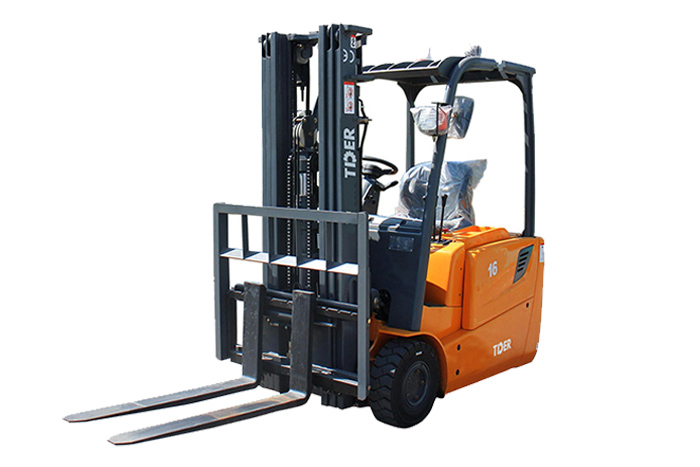
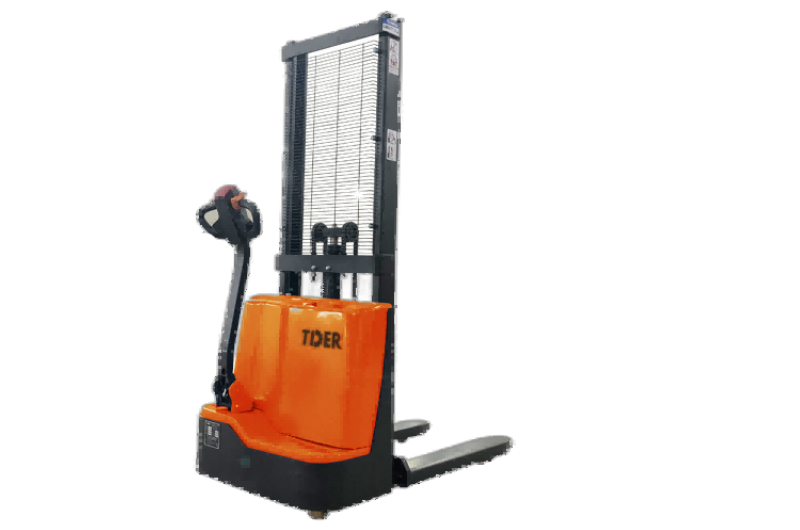
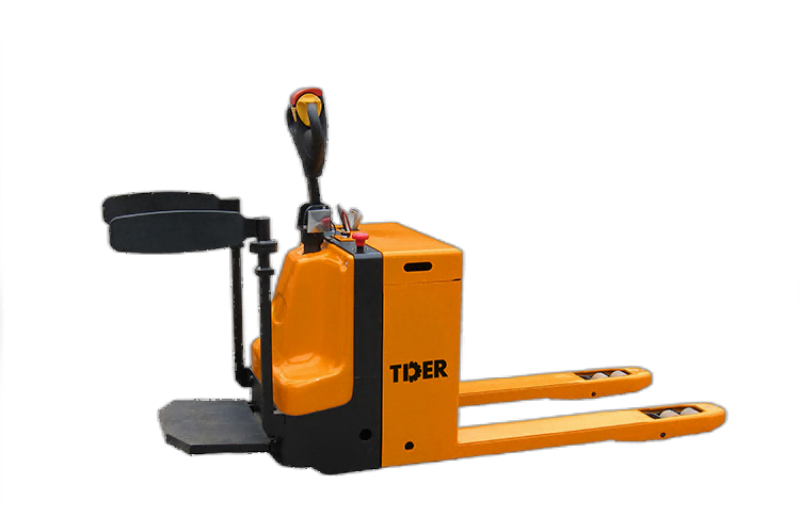
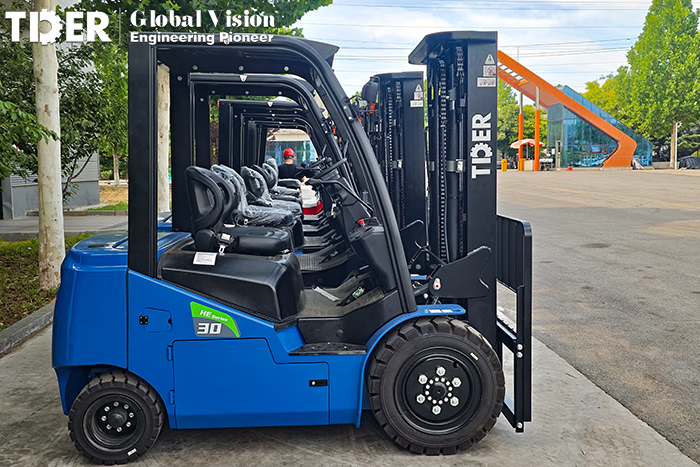
As electrification accelerates, selecting the right electric forklift for specific operating conditions has become a central concern for material handling professionals. TDER has developed a dual-technology product framework based on lithium-ion and lead-acid batteries, forming three core solutions: the K Series and E Series lithium-ion forklift range, alongside lead-acid electric forklifts.
1. K Series: A Balanced Solution for Cost and Efficiency
The K Series targets mainstream applications, emphasising efficiency and practicality. Equipped with advanced lithium battery technology, this lithium forklift solution offers longer service life (1,500–3,000 charge cycles) and faster charging times (1.5–2 hours), significantly reducing downtime. Suitable for warehousing, manufacturing and multi-shift operations, the series employs a direct-drive motor system to lower energy consumption while maintaining strong performance. For most users, this lithium forklift represents a reliable and cost-effective option.
2. E Series: High Performance for Demanding Conditions
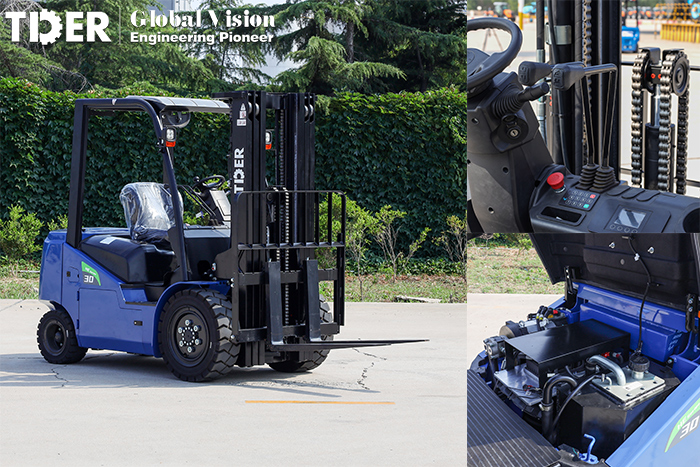
Designed for intensive operations and complex environments, the E Series delivers performance comparable to diesel forklifts while retaining the low noise and zero-emission benefits of an electric forklift. Its short wheelbase enhances manoeuvrability, making it well suited for heavy loads, frequent inclines and continuous high-intensity tasks. As a high-performance lithium forklift, it provides extended battery life and high charging efficiency, meeting the demands of both performance and adaptability.
3. Lead-Acid Series: A Practical Entry-Level Option
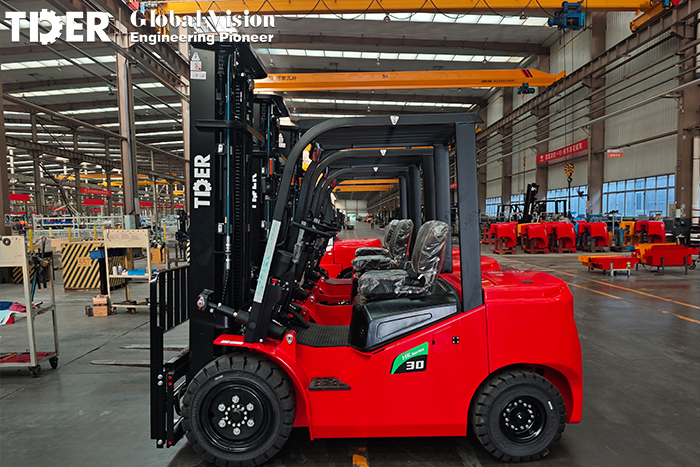
For users with limited budgets or less demanding applications, lead-acid electric forklift models remain a practical choice. Their lower upfront cost and mature technology make them suitable for short-distance handling tasks. However, compared to a lithium forklift, they have shorter lifespans (approximately 1,000–1,500 cycles), longer charging times (6–8 hours) and lower energy efficiency. As such, they are better suited to low-intensity, non-continuous operations.
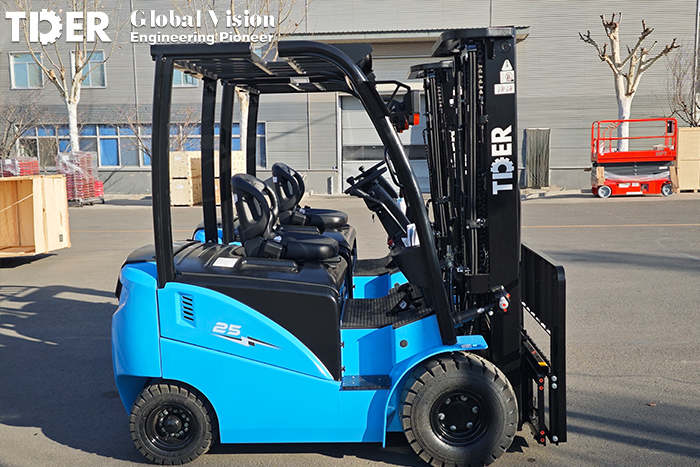
In summary, the K Series balances efficiency and cost, while the E Series focuses on performance in demanding environments. Both lithium forklift solutions offer longer service life, faster charging and higher efficiency. Lead-acid electric forklift models provide a viable option for budget-conscious users or simpler applications. Choosing the right solution is not merely an equipment upgrade—it is a strategic decision to regain control over cost structures and operational flexibility.
III. Choosing Electric Means Choosing Control
Amid sustained oil price volatility and accelerating energy transition, the electric forklift is no longer merely an alternative—it is becoming the mainstream.
For businesses, this shift represents not only an equipment upgrade but also a forward-looking strategy to enhance cost control and support sustainable development. For customers, selecting the right electric forklift—particularly a lithium forklift—effectively locks in a more stable and predictable cost structure.
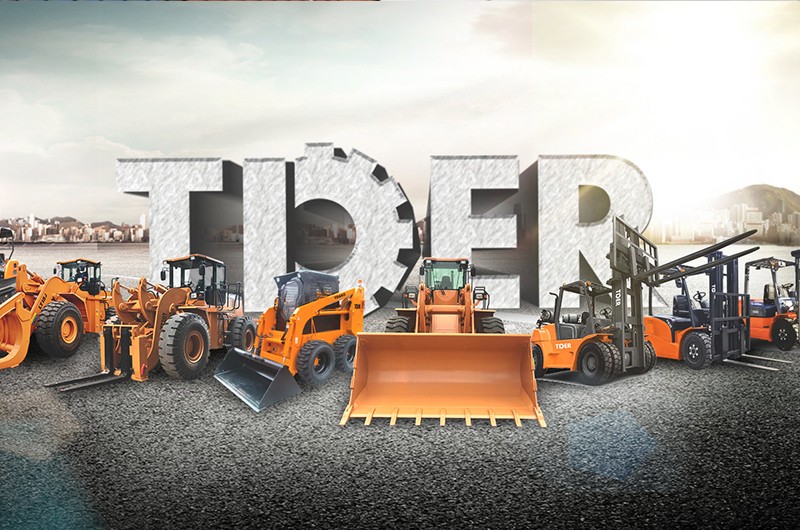
In an uncertain market environment, those who act early are better positioned to take control. Through its comprehensive product portfolio, TDER aims to support this transition—offering not just forklifts, but a pathway to greater stability, efficiency and long-term resilience.
 2003- Xiamen TDER Industrial Co., Ltd. All Rights Reserved.