Service Hotline:86-17346269651 /

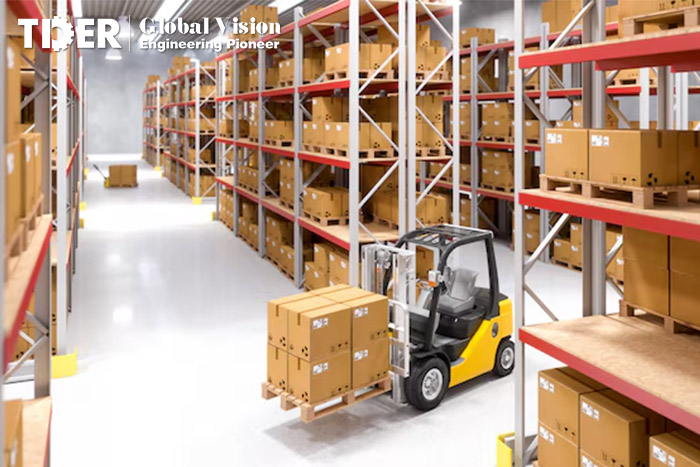
Across the globe, warehouse operations are facing increasingly clear structural constraints: rising land prices, higher warehouse rents, and at the same time, continuously growing inventory volumes and inbound–outbound frequency. For many companies, relying solely on expanding floor space is no longer sufficient to support long-term development. As a result, “making use of vertical space” is gradually shifting from an optional strategy to an unavoidable challenge.
Against this backdrop, vertical warehousing is no longer an exclusive solution for large-scale logistics enterprises. Instead, it is becoming an upgrade path actively considered by a growing number of manufacturing, e-commerce, and distribution-oriented warehouses.
I. Under Verticalization, the Role of Warehouse Equipment Is Changing
As warehouses evolve toward higher racking systems and den ser layouts, the role of warehouse equipment is changing accordingly. In the past, equipment was primarily responsible for basic transport tasks. In verticalized environments, however, equipment must simultaneously deliver stability during high-level operations, precise maneuverability within narrow aisles, and long-term reliability under high-frequency use.
This shift means that the limitations of traditional equipment—particularly in lifting height, aisle adaptability, and safety redundancy—are progressively magnified. Equipment selection is no longer a simple comparison of specifications; it has become a critical decision that directly affects space utilization, operational efficiency, and overall operating costs. It is within this context that companies are re-evaluating the suitability and value of different types of warehouse equipment in vertical storage upgrades.
II. Main Equipment Solutions in Vertical Warehousing
As warehouse operations worldwide continue to move toward verticalization, different types of material handling equipment play critical roles in their respective application scenarios. The three most common categories on the market are reach trucks, VNA (Very Narrow Aisle) forklifts, and electric stackers, each addressing the operational needs of mid-to-high racking, high-density aisles, and light-duty mid-to-low-level storage respectively.
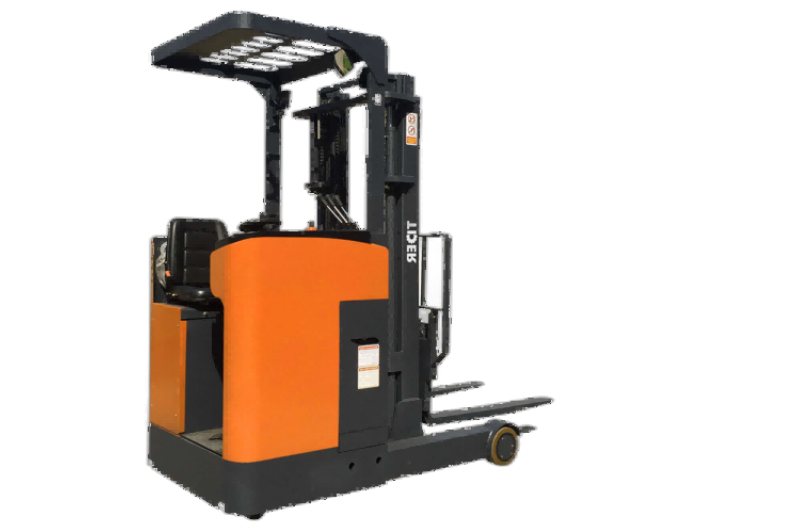
Reach trucks are suitable for high racking heights of approximately 6–12 meters. They combine flexible operation in standard aisles with strong lifting stability, making them the preferred transition solution for many companies upgrading from conventional forklifts to vertical warehousing. Compared with typical market offerings, TDER reach trucks cover a lifting range from 1.6 to 13 meters, with load capacities from 1 to 3 tons. In addition, omnidirectional reach versions are available with maximum load capacities of up to 5 tons. All models are backed by a 1-year or 2,000-hour warranty, providing enterprises with reliable assurance based on international performance standards.
VNA forklifts primarily serve high-density automated and semi-automated warehouses. Operating within ultra-narrow aisles of 1.6–2.0 meters, they utilize guide rails or magnetic guidance systems to perform high-level storage and retrieval. This configuration can increase space utilization by 30–50%, making VNA solutions particularly suitable for warehouses facing high rental costs, fast inventory turnover, and severe space constraints. While maintaining mainstream industry configurations, TDER VNA forklifts are offered at factory-direct pricing, enabling customers to maximize storage density while keeping investment costs under control.
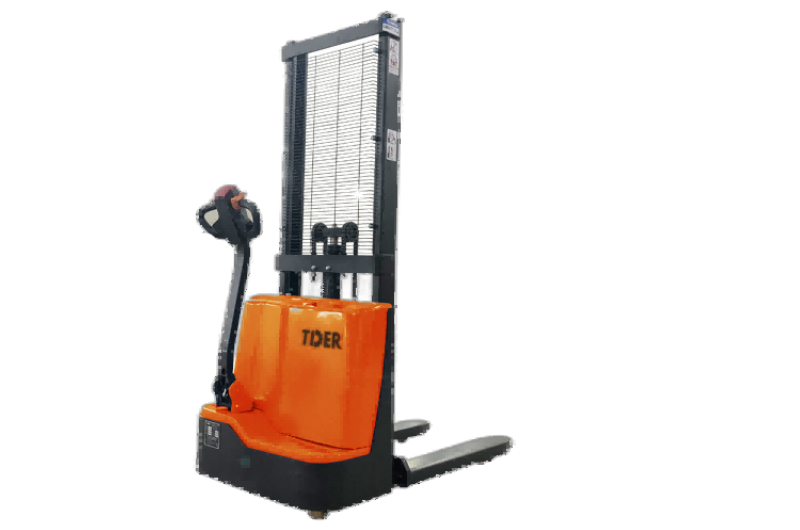
Electric stackers are better suited for light-duty applications, mid-to-low racking heights, and small to medium-sized warehouses. As an entry-level solution for vertical storage, they offer clear cost advantages. TDER electric stackers cover lifting heights from 1.6 to 5.5 meters, with load capacities ranging from 0.8 to 3 tons. Equipped with high-reliability hydraulic systems and precise control components, they deliver enhanced performance within their class while maintaining strong economic efficiency.
Through comparison with mainstream equipment configurations available on the market, TDER products demonstrate advantages not only in lifting height, load capacity, and multi-scenario adaptability, but also through a factory-direct, high-value pricing strategy. This enables enterprises to access a complete portfolio of vertical warehousing solutions—from entry-level to high-end—making investments in vertical storage more cost-effective and sustainable.
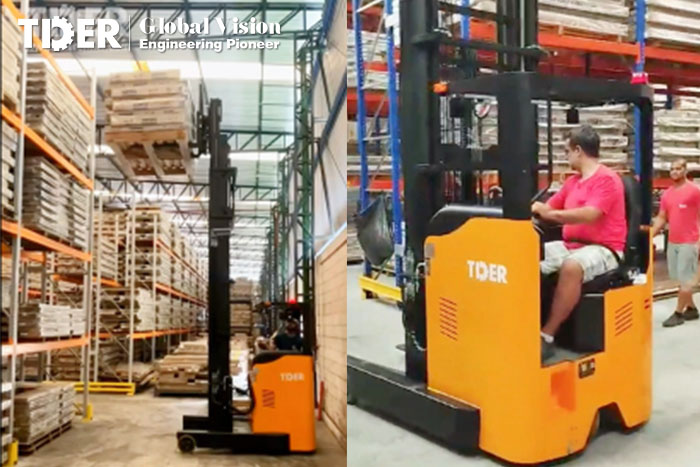
Customer Feedback:48V Seat Type Reach Truck
III. Key Decision Criteria for Warehouse Equipment Selection
As warehousing continues to evolve toward verticalization and refined operations, equipment selection has become a decisive factor influencing long-term warehouse performance. For global buyers, choosing the right material handling equipment is not only about upfront purchase cost, but also directly impacts operational efficiency, maintenance investment, and safety performance over many years. When comparing different solutions, the following key criteria deserve particular attention.
1. Work Intensity and Shift Patterns
When evaluating equipment, buyers should consider average daily throughput and continuous operating hours. For example, if a warehouse handles more than 500 pallets per day and operates continuously for over eight hours, reach trucks or omnidirectional reach trucks that support fast charging or battery swapping should be prioritized. Decisions should not be based solely on nominal endurance hours, in order to avoid operational interruptions during peak periods.
2. Load Weight and Pallet Specifications
For different pallet sizes and weight ranges, selecting equipment with a 15–20% load redundancy in mast and fork capacity helps maintain stability during high-level or off-center lifting operations, while also reducing the need for additional modifications.
3. Floor Conditions and Aisle Layout
For warehouses with ramps or uneven floor sections, maximum allowable gradient and tire specifications should be carefully evaluated. Models equipped with electronic stability control or hydraulic shock absorption can significantly reduce operational risks during high-level handling.
4. Cost and Maintenance Considerations
When assessing total cost of ownership, initial purchase price, average annual maintenance frequency, spare parts availability cycles, and expected service life should be quantified together. Calculating the cost per ton of material handled often reveals higher-value solutions that may not necessarily have the lowest upfront price.
5. Safety Standards and Certifications
For cross-market procurement, CE or ISO certification alone is not sufficient. Buyers are advised to review real-world application cases in target markets, including long-term stability reports under high-temperature, low-temperature, or humid conditions, to ensure optimal equipment selection for multi-region operations.
Overall, by evaluating work intensity, load characteristics, operating conditions, cost structure, and safety standards from multiple perspectives, buyers can more clearly identify the equipment best suited to their specific warehouse scenarios, enabling more stable and sustainable decisions during vertical warehousing upgrades.
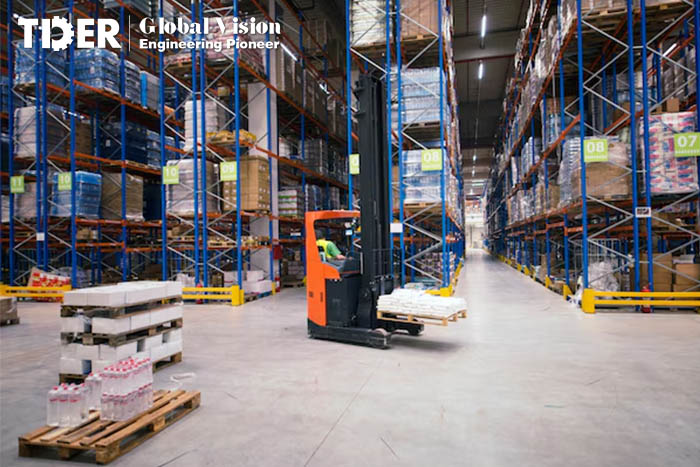
IV. From Planning to Execution: Practical Pathways for Upgrading Vertical Warehousing
Within vertical warehousing projects, a widely shared industry consensus has gradually emerged: attempting a one-step, all-encompassing transformation often carries higher risks than returns. Professionals with long-term experience in warehouse system planning frequently note that projects which ultimately succeed are not necessarily those with the most “advanced” initial designs, but rather those with the greatest flexibility for adjustment.
A warehouse planning manager involved in the construction of multiple regional distribution centers once reflected during an internal review:
“During the early stages of the project, we tried to introduce high-density racking and narrow aisle equipment right away, hoping to solve space constraints in one move. However, once operations began, we realized that existing floor conditions and operator habits were not well aligned, and overall efficiency actually declined.”
Following several rounds of research and on-site testing, the team revised its approach. Instead of immediately narrowing aisle widths, they first increased lifting heights and optimized existing racking structures to gradually unlock vertical space. Only after achieving stable operations at this stage did the project move on to the next phase of density optimization.
As throughput continued to grow, the warehouse entered a mid-term optimization phase. Another operations leader from a large-scale e-commerce warehousing network shared a similar insight:
“Once racking heights increase, what truly differentiates performance is no longer technical specifications, but the controllability and consistency of equipment during high-level operations.”
In practice, they observed that differences in equipment performance—under continuous high-level picking, frequent turning, and prolonged operation—directly affected how quickly new operators could adapt and the overall productivity of work teams. As a result, factors such as ease of operation, minimal performance variation, and ease of replication became more critical than marginal gains in single-cycle efficiency.
When warehouses reach a more mature operational stage, some enterprises begin transitioning toward higher-density layouts or semi-automated systems. Several system integrators noted in their project reviews that facilities which reserved interface compatibility and configuration expansion capabilities during early equipment selection experienced far smoother upgrades later on. In contrast, solutions designed strictly around immediate needs often imposed limitations as business requirements evolved.
For this reason, a growing consensus has formed within the industry: the selection of vertical warehousing equipment should not only answer the question of “Is it suitable today?” but also “Will it remain usable three to five years from now?” This emphasis on long-term scalability has become an unspoken benchmark among experienced buyers.
V. How to Assess Whether Equipment Is Worth a Long-Term Investment
Beyond technical parameters and configuration lists, global buyers can evaluate warehouse equipment from several more practical, experience-driven perspectives.
1. Focus on stability under real operating conditions, rather than specifications alone.
Smoothness during high-level lifting, consistency in repetitive operations, and performance retention after prolonged use often provide a more accurate reflection of actual equipment value than isolated technical indicators.
2. Assess supplier reliability in delivery and after-sales support.
For cross-border procurement, factors such as parts compatibility, maintenance complexity, and responsiveness of technical support have a direct impact on equipment availability. Even with similar configurations, differences in supply models tend to translate into noticeable cost gaps over long-term use.
3. Avoid using price as the sole decision criterion.
A more rational approach is to evaluate procurement cost in conjunction with service life, maintenance frequency, and efficiency improvements. For companies undergoing warehouse upgrades, equipment solutions capable of supporting multiple development stages and reducing repeated investments typically offer stronger long-term value.
Buyers are therefore advised to incorporate their warehouse development roadmap into the decision-making process, rather than focusing exclusively on current scale. Selecting equipment with a certain degree of performance, configuration, and application flexibility can significantly enhance operational adaptability as business volumes grow or warehouse models evolve.
 2003- Xiamen TDER Industrial Co., Ltd. All Rights Reserved.